RBI Master Direction-Digital Payment Security Controls
Table of Contents
RBI's Master Direction on Digital Payment Security Controls (DPSC) is no longer a "pure tech" document. It is a board‑level governance and conduct‑risk instrument.
Why RBI Cares About Digital Payment Security
Digital Payments are the Most Widely Used Mode of Retail Payment in India.
RBI explicitly states that the "pre‑eminent role" of these systems makes the security of digital payment channels a key supervisory priority. The DPSC directions were issued vide RBI/2020‑21/74 DoS.CO.CSITE.SEC. No.1852/31.01.015/2020‑21; dated February 18, 2021, to ensure regulated entities (REs) implement a robust governance structure and common minimum standards of security controls across internet banking, mobile banking, card payments and other digital payment products.
Digital payments can no longer be treated as a pure IT project or channel initiative; they are a regulated activity with clearly laid-out expectations on Board oversight, risk management and customer protection.
The direction is technology‑agnostic but outcome‑specific: secure, resilient, complaint‑light digital payments that do not expose customers or the institutions to avoidable fraud losses or reputational damage.
To whom is it applicable?
The DPSC directions apply to scheduled commercial banks (excluding regional rural banks), small finance banks, payment banks and credit‑card issuing NBFCs. In practice, these entities also act as anchors for payment gateways, aggregators, UPI apps and wallets, meaning DPSC considerations ripple through the entire digital‑payments ecosystem.
The channels covered include:
- Internet banking platforms used by customers to initiate transactions and manage accounts
- Mobile banking apps and mobile‑based payment applications
- Card payment systems (card‑present and card‑not‑present)
- Other digital payment products and services that rely on bank infrastructure, directly or via third parties
The direction mandates risk assessments that cover "the complete payment ecosystem as well", third‑party apps, payment partners and even customer‑facing communication surfaces should be brought into the digital payment risk perimeter.
This is exactly where phishing sites, fake apps and social‑media impersonation begin to intersect with DPSC expectations.
Governance: What are the Board, CCO and CRO's responsibilities?
Chapter II of the Direction mandates that regulated entities formulate a digital payment products and services policy with Board Approval. This policy must explicitly discuss payment‑security requirements from functionality, security and performance (FSP) perspectives, including confidentiality, integrity of data and processes, and security of the applications supporting digital products.
From a governance standpoint, the Direction expects Regulated Entities to:
- Integrate digital payment risk into the overall risk management programme, covering compliance risk, fraud risk, operational risk, business continuity and cyber risk.
- Define roles and responsibilities for Board, Senior Management and the CISO for overseeing digital‑payment security.
- Approve risk appetite and quantitative benchmarks for digital payment security and periodically compare actual performance against these benchmarks to detect adverse trends.
For CCO and CRO, the practical implication is that DPSC compliance cannot be delegated solely to IT or InfoSec; non‑compliance or weak implementation is a Board‑level risk that can draw supervisory scrutiny, including through thematic reviews or incident‑driven inspections.
Risk Management
The DPSC Directions require regulated entities to incorporate appropriate processes into their governance and risk management programs for identifying, analysing, monitoring and managing the specific risks, including compliance risk and fraud risk, associated with the portfolio of digital payment products and services.
This risk assessment must:
- Evaluate payment‑data protection, fraud patterns, customer behaviour and potential abuse vectors for each digital product.
- Cover operational risk, fraud risk, business continuity, compliance with extant cybersecurity requirements, and compatibility considerations.
- Explicitly cover the "surrounding ecosystem", meaning partners, vendors and customer‑facing channels that influence transaction initiation and authentication.
Banks and financial institutions increasingly face incidents where social‑engineering and impersonation occur outside the bank's core systems, e.g., fake UPI collection requests, cloned/fake apps using the bank's brand, or phishing pages that mimic the internet‑banking login but sit on unrelated domains. While these assets are technically "outside the perimeter," the resulting losses, complaints and reputational damage clearly sit within the regulated entities' risk metrics and regulatory narrative.
Security Control Guidelines
The Direction lays down generic security controls that regulated entities must implement across digital payment channels, including secure communication protocols, appropriate cryptographic standards, robust server‑side security and secure session management. It also requires application security life‑cycle (ASLC) practices, such as secure coding standards, threat modelling and rigorous pre‑production testing for web and mobile applications.
Channel‑specific requirements include:
- Internet banking and mobile banking
- Strong customer authentication, typically multi‑factor, and, where relevant, device binding or contextual risk‑based checks.
- Defence against common web and mobile vulnerabilities (e.g., injection, XSS, insecure direct object references, improper session handling), aligned with frameworks such as OWASP.
- Card payments
- Adherence to PCI card‑security standards for storage, processing and transmission of card data.
- Controls for EMV, tokenisation, and secure card‑not‑present flows, including 3‑D Secure and risk‑based authentication.
These requirements intersect directly with the CISO's domain but require CCO/CRO oversight because security control failures translate into reportable incidents, customer disputes and potential supervisory actions.
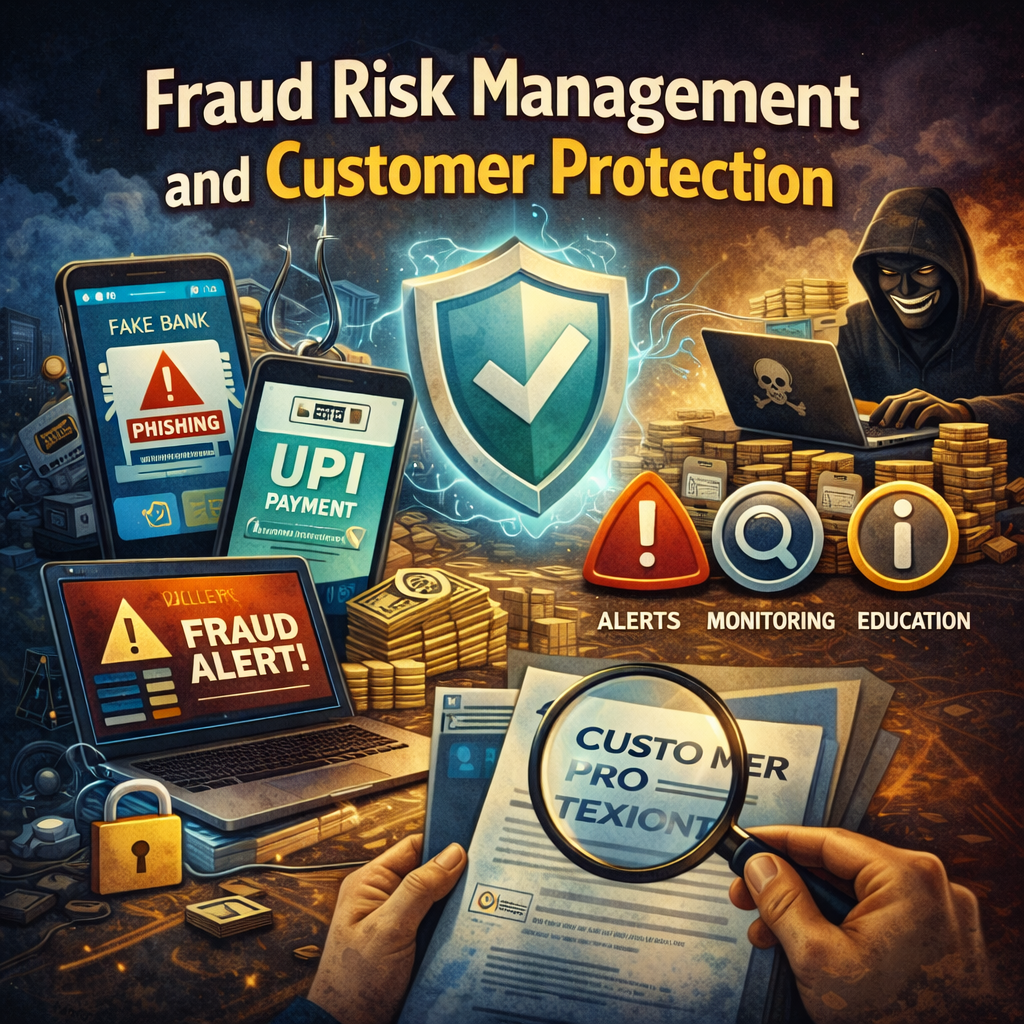
Fraud Risk Management and Customer Protection
The Direction devotes significant attention to fraud risk management, reconciliation mechanisms, customer protection and grievance redressal related to digital payments.
The regulated entities are expected to:
- Implement real‑time or near‑real‑time fraud monitoring systems, including behavioural analytics and anomaly detection for digital transactions.
- Maintain robust reconciliation processes to identify discrepancies and potential fraud patterns across digital channels.
- Establish clear policies for sharing liability between the bank and the customer in fraud cases, aligned with RBI's existing customer liability circulars.
Customer awareness and grievance redressal expectations include:
- Periodic security advisories, alerts and education campaigns on safe digital payment usage.
- Effective and time‑bound complaint handling for digital payment issues, with transparent escalation channels and disclosure of turnaround times.
For Legal and Compliance teams, these provisions must be embedded into customer‑facing terms and disclosures, internal SOPs, and complaint‑handling frameworks, ensuring that actual practice matches policy and regulatory expectations.
RBI Master Directions for Non‑Bank Payment System Operators
In July 2024, RBI issued the Reserve Bank of India (Cyber Resilience and Digital Payment Security Controls for non‑bank PSOs) Master Directions, 2024, to strengthen the safety and security of payment systems operated by authorised non‑bank payment system operators. These Directions apply to all authorised non‑bank PSOs and seek to enhance overall information‑security preparedness and operational resilience.
Key requirements for PSOs include:
- Board‑approved policies for cyber resilience and digital‑payment security, including risk management of linkages with unregulated entities such as payment gateways and third‑party service providers.
- Baseline security measures ensuring system resilience, continuous migration to updated security standards, and alignment of existing card, PPI and mobile‑banking security measures with the new Directions.
For regulated entities that rely heavily on PSOs for payment processing, this creates an additional layer of third‑party risk that must be evaluated within the DPSC‑mandated governance and risk‑assessment framework. CCOs and CROs should ensure that outsourcing arrangements, SLAs and due diligence questionnaires reflect both the RE's and PSO's regulatory obligations.

Why brand‑protection, brand right enforcement and takedown capabilities?
The DPSC Directions implicitly assume a threat landscape that spans beyond core banking systems, into the broader digital presence where customers interact with the bank's brand.
Common patterns now include:
- Phishing domains and websites mimicking the bank's internet banking or UPI interface
- Fake mobile apps in third‑party app stores using the bank's name and logo
- Rogue payment pages and fake offers circulated through social media or messaging apps
- Impersonation of bank relationship managers or customer‑support handles soliciting credentials or OTPs
While these fraudulent assets may sit on infrastructure not owned by the regulated entities (banks and financial institutions), the consequences may include fraudulent transactions, customer complaints, negative media and potential regulatory notices seeking an explanation. The onus is on the financial institutions.
AiPlex-Your Critical Compliance Partner
This is where a specialised techno‑legal brand‑protection partner, such as AiPle,x can provide critical support to DPSC compliance.
This is how AiPlex can help:
- Attack‑surface and brand‑abuse monitoring
- Continuous scanning of domains, app stores, social platforms and marketplaces for use of the bank's brand, trademarks and payment interfaces.
- Prioritisation based on risk signals (e.g., active credential capture, real‑time fraud reports, traffic patterns).
- Evidence‑grade investigation and documentation
- Packaging URLs, screenshots, WHOIS data, hosting information and incident summaries in formats suitable for internal fraud teams, law‑enforcement agencies and regulators.
- Mapping each incident to relevant regulatory expectations (e.g., DPSC fraud‑risk management, customer protection, grievance redressal obligations) to support internal reporting.
- Takedown execution and follow‑through
- Coordinating with registrars, hosting providers, app stores and social‑media platforms to remove phishing sites, fake apps and impersonation accounts.
- Providing closure documentation (takedown confirmations, timelines) to feed into DPSC compliance reporting, Board‑level MIS and risk‑committee dashboards.
The value proposition that AiPlex brings to the table is the ability to demonstrate to RBI that the regulated entity (banks & financial institutions) has a structured, proactive programme to detect and neutralise digital threats that exploit the bank's brand and payment interfaces, even when those threats sit on third‑party infrastructure.
An Action Plan to Stay Compliant with RBI Master Direction
To translate DPSC requirements into a defensible, auditable programme, CCOs, CROs, and the Legal teams of the financial institutions (regulated entities) can consider the following steps:
Update the Board‑approved digital payment policy
- Ensure it explicitly references the DPSC Directions, ecosystem risk, and the role of third‑party providers (including PSOs and brand‑protection partners).
- Embed clear responsibilities for Compliance, Risk, InfoSec and Business for ongoing adherence.
Integrate DPSC metrics into risk and compliance dashboards
- Track digital‑fraud events, attempted phishing/impersonation incidents, complaint volumes and resolution times for digital‑payment issues.
- Link brand‑abuse takedown statistics (sites identified, sites removed, time‑to‑takedown) with fraud‑loss and complaint metrics.
Align outsourcing and vendor‑risk frameworks
- Incorporate DPSC and PSO Master Directions into vendor due diligence, including requirements for cyber resilience, incident reporting and external threat monitoring across unregulated entities in the payment chain.
- For specialised providers handling brand‑abuse detection and takedowns, ensure NDAs, data‑handling clauses and reporting obligations meet RBI's expectations on outsourcing and confidentiality.
Strengthen legal and grievance documentation
- Update customer‑facing terms, privacy notices and disclaimers to reflect digital‑payment risks, liability allocation and official communication channels.
- Ensure internal grievance‑redressal SOPs explicitly cover frauds involving impersonation, phishing or fake apps, with clear triggers for engaging external takedown partners and, where appropriate, law enforcement.
Prepare for supervisory review and incident‑driven scrutiny
- Maintain audit‑ready documentation showing how DPSC requirements are implemented, including minutes from risk‑committee meetings, Board updates and incident post‑mortems.
- For major phishing or impersonation incidents, retain full case files combining technical, legal and customer‑impact analysis to support any RBI queries.

Staying Compliant with RBI Master Directions is a competitive advantage
Compliance is not just a defensive exercise; when executed well, it becomes a differentiator in an environment where customers and regulators are acutely sensitive to digital‑fraud risk.
Institutions that can demonstrate strong governance, ecosystem‑wide risk management and proactive deletion of brand‑abuse and impersonation threats will enjoy more regulatory trust and higher customer confidence.
For CCOs, CROs and Heads of Legal, partnering with a specialised techno‑legal brand‑protection provider like AiPlex offers a pragmatic way to extend DPSC‑grade controls into the broader digital landscape where fraudsters operate.
This combination of internal governance and external enforcement muscle creates exactly what the Master Direction envisages: a secure, resilient and trusted digital‑payments environment for customers and regulators alike.
Share this article
Loading latest posts...